Buying a home in Minnesota is exciting — but the home inspection can feel overwhelming.
Many buyers panic when they receive a 40–100+ page inspection report filled with comments about foundation cracks, roofing, mechanical systems, or basements. The big question is:
What’s normal for Minnesota homes — and what should truly worry you?
In a recent episode of my YouTube podcast, I sat down with Zach Gustafson of Zach’s Home Inspections LLC to break down what Minnesota buyers need to understand before, during, and after a home inspection.
If you are buying a home in Minnesota — especially as a first-time buyer or relocation client — this guide will help you feel confident and prepared.
Why Minnesota Home Inspections Are Different
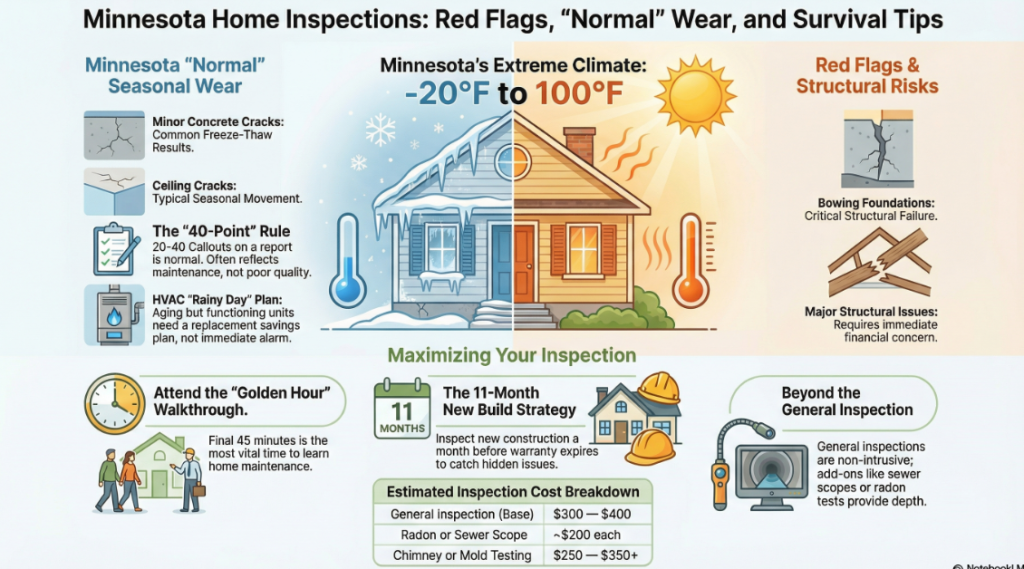
Minnesota homes are built to handle extremes:
- 20 below zero winter temperatures
- 90–100 degree summer heat
- Freeze/thaw cycles
- Snow load on roofs
- Spring snowmelt and heavy rain
Because of these climate conditions, Minnesota homes naturally experience seasonal movement and wear.
That means some inspection findings that look scary on paper may actually be completely normal here.
Understanding that difference is critical when buying real estate in Minnesota.
What’s Normal in a Minnesota Home Inspection?
1. Minor Foundation Cracks
Due to freeze and thaw cycles, minor cracking in foundations and garage floors is common. Small vertical or hairline cracks typically do not mean structural failure.
These are often cosmetic or typical seasonal movement issues.
2. Basement Imperfections
Minnesota basements are common — and with them comes:
- Minor moisture signs
- Efflorescence
- Small settlement cracks
- Grading adjustments needed
Basements in Minnesota are not the same as slab foundations in warmer states. Buyers relocating here are often surprised by what is considered “normal.”
3. Cosmetic Drywall or Ceiling Cracks
Small cracks in drywall seams, especially in vaulted ceilings, often result from seasonal movement. These are generally not structural red flags.
4. Older Mechanical Systems
It is common for homes in Minneapolis, St. Paul, and surrounding suburbs to have older:
- Furnaces
- Air conditioning units
- Water heaters
Age does not automatically mean failure. If systems are functioning properly, buyers simply need a plan for future replacement.
What Are True Home Inspection Red Flags in Minnesota?
Not everything is “normal.” Some issues deserve serious attention.
1. Failing Roof Systems
Missing shingles, visible damage, soft spots, or roof aging beyond expected life can be expensive and require immediate budgeting.
A proper roof inspection — including attic evaluation — is critical.
2. Significant Foundation Movement
While minor cracks are common, bowing foundation walls or major structural movement can be costly. If structural repairs were previously completed correctly by engineers, that is different — but active movement should be taken seriously.
3. Moisture Intrusion in Stucco or Siding
Moisture behind stucco or deteriorating wood siding can lead to expensive repairs. Exterior envelope issues are some of the larger investment concerns buyers should evaluate carefully.
4. Electrical or Safety Concerns
Missing smoke detectors, outdated panels with safety risks, or non-functioning systems should not be ignored.
Old Homes vs. New Construction Inspections
Many buyers assume new construction does not require an inspection. That is not always true.
Even brand-new homes can have:
- Incomplete installations
- Minor defects
- Code-related oversights
- Cosmetic punch list items
Buyers typically have two options with new construction:
- Schedule a standard home inspection before closing.
- Schedule a 10–11 month warranty inspection before the builder’s warranty expires.
Both options provide peace of mind.
How Much Does a Minnesota Home Inspection Cost?
Home inspection pricing varies by size and property type, but typically:
- General home inspection: $300–$400 for most townhomes and single-family homes under 3,000 square feet
- Radon testing: Around $200
- Sewer scope: Around $200
- Chimney inspection: Around $250
- Mold testing: Higher due to lab sampling
While inspections are an added cost, they provide essential information and help buyers make informed decisions.
How to Read a Long Inspection Report Without Panic
Inspection reports can be lengthy — sometimes over 100 pages.
Here’s how I guide my clients to think about them:
Separate Items Into Three Categories:
- Safety or non-functioning issues
- Maintenance items
- Cosmetic or code updates
Not every item is negotiable. Some are simply part of homeownership.
The goal of a home inspection is not to find a perfect house. The goal is to understand the condition of the property and make smart, informed decisions.
Why the Inspection Walkthrough Matters
The final walkthrough with the inspector is one of the most important parts of the process.
This is where buyers:
- Ask questions
- Learn where shutoffs are located
- Understand maintenance needs
- Gain confidence in the property
Being present reduces stress and confusion later.
One Important Piece of Advice for Minnesota Home Buyers
Get an inspection — and be engaged in the process.
There was a period in Minnesota’s competitive market when buyers were waiving inspections. That created unnecessary risk.
An inspection gives you clarity, not fear.
Buying a Home in Minnesota? Work With Local Experts
Minnesota homes are unique because of climate, age, and construction styles. Understanding what is normal versus what is serious requires local experience.
If you are buying a home in:
- Minneapolis
- St. Paul
- Woodbury
- Eagan
- Edina
- Inver Grove Heights
- Or anywhere in the Twin Cities
I would love to guide you through the process.
From inspections to negotiations to closing, my goal is to make sure you feel informed and confident every step of the way.
Lana Kalinowski
Realtor®, Edina Realty
651-706-6661